Kutnohorsko Kolínsko Turistická Oblast

Cathedral of the Assumption of the Virgin Mary and St. John the Baptist

Sedlec – 

Kutná Hora

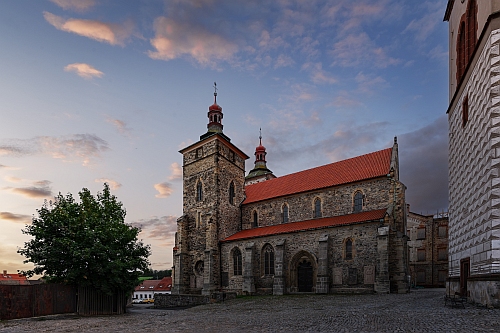
A unique UNESCO monument – the Cathedral of the Assumption of the Virgin Mary and St. John the Baptist in Sedlec near Kutná Hora is the convent church of the former oldest Cistercian abbey in Bohemia. Together with the Sedlec ossuary, this church forms a wholesome complex of the oldest part of Kutná Hora. The cathedral was built between 1290 and 1320 and combines North French Gothic cathedral architecture with German elements.

After the Hussite invasion in 15th. century, the cathedral remained in ruins, yet had such a monumental impact that in 1681 it was named “Splendissima Basilica” – the most magnificent basilica. At the turn of the 17th 17. and 18th centuries the cathedral was rebuilt by the Cistercian order in the Baroque-Gothic style of Jan Blažej Santini-Aichl. He wove unique self-supporting building elements into the building – a vault called “the Czech sail vault” (česká placka) and a spiral staircase. After the dissolution of the Sedlec Monastery by Joseph II and the establishment of a tobacco factory in its former buildings, the cathedral began to serve as a Roman Catholic parish church.

In the church we can find precious artistic monuments, such as paintings by Peter Brandl, Michael Leopold Willmann, Jan Krystof Liška, etc. The cathedral has an accessible first attic, through which it is possible to go up to the choir of the west façade. The church treasury contains one of the most precious jewels of Central Europe – the original Sedlec monstrance. According to recent findings, it is one of the oldest surviving Gothic monstrances in the world.

Tickets in Sedlec cannot be purchased directly at the monuments, but only at the Sedlec information centre at Zámecká Street 279. Ticket office closes 15 minutes before the monuments close! For more information about the cathedral, tours and opening times, visit the website.

Mapa

V blízkosti
najdete

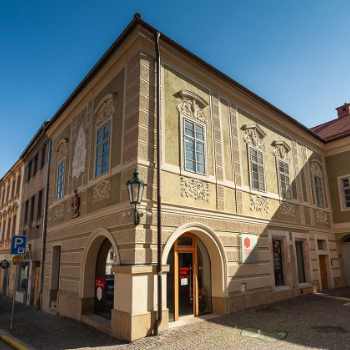
Italian Court

Kutná Hora

Chapel of All Saints with ossuary

Kutná Hora

Jesuit College with the Gallery of the Central Bohemian Region

Kutná Hora

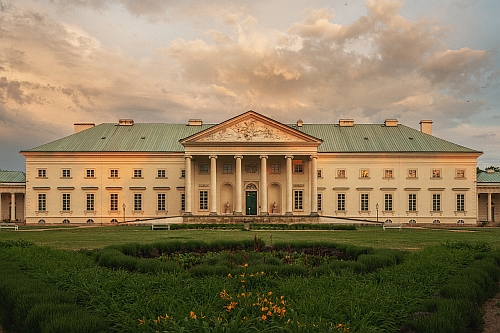
The Kačina Chateau and grounds

Kutná Hora

Dačického House

Kutná Hora

St. Barbara´s Cathedral

Kutná Hora

Trips

Gastronomy

Accommodation

Discover the surroundings

The Kačina Chateau and grounds

Kačina chateau is one of the most important Empire buildings in the Czech Republic. Je to příklad klasicistní nebo-li empírové architektury a vystavěn je v naprosto čistém stylu. Od dob svého vzniku nedoznal zámek žádných architektonických změn. The National Museum of Agriculture is located on the castle grounds and you will find there, for example, the “Kingdom of Bees”, “Story of Wood” or “Models of Folk Buildings” exhibitions.

Learn more

Jesuit College with the Gallery of the Central Bohemian Region

It was Giovanni Domenico Orsi, an important builder of Jesuit buildings and an Italian architect born in Vienna, who was the author of the project of the early Baroque building. The partially preserved plans show that he originally chose an E-shaped plan and the current F-shaped plan is the result of the project never being fully completed. After Orsi’s death, Carlo Lurago continued the construction and the College was completed in 1750.

Learn more

Čáslav Synagogue

The modern Jewish community in Čáslav began its history in the mid-19th century. At the end of the century, the Jewish inhabitants of Čáslav experienced a period of social and cultural flourishing, which culminated at the turn of the century with the construction of a new synagogue on the former Rudolfova třída (today’s Masaryk Street No. 111).

The municipality approached the prominent Viennese architect Wilhelm Stiassni, who had also participated in the construction of the Jubilee Synagogue in Prague on Jerusalem Street. He designed a synagogue in the Moorish style for Čáslav, which was to replace an older house of prayer documented from the mid-19th century. The plans of this Jewish builder were promptly approved by the Israelite Association and the municipal authority in 1897, but it took two more years before construction began. The possible cause was lack of finance. Not only the inhabitants of Čáslav and its surroundings, but also the Rotschild family in Vienna contributed to the construction. Construction work began on 13. March 1899 and already on 2.9.1899 the ceremonial approval took place.

The Čáslav synagogue is a building of high architectural quality and is protected as a cultural monument of the Czech Republic.

Learn more